Τον τελευταίο καιρό κυκλοφορούν στο διαδίκτυο διάφορα «ψευδο-διδακτικά» δημοσιεύματα για ανατολικά θρησκεύματα, τα οποία συχνά αναπαράγονται άκριτα ή χρησιμοποιούνται από ορισμένους ως μέσο πολεμικής κατά της Εκκλησίας. Το ζήτημα δεν είναι ότι γίνεται αναφορά (κυρίως) στον Βουδδισμό· είναι ότι πολλά από αυτά τα κείμενα παρουσιάζουν μια εξιδανικευμένη, μονοδιάστατη εικόνα. Έτσι, ο αναγνώστης μένει με την εντύπωση ότι ο Βουδδισμός είναι απλώς μια τεχνική αυτοβελτίωσης, χωρίς τελετουργία, χωρίς πίστη, χωρίς θρησκευτική πράξη, και χωρίς «μεταφυσικά» στοιχεία. Όμως αυτό δεν αποδίδει το σύνολο των βουδδιστικών παραδόσεων όπως πράγματι βιώνονται, ιδιαίτερα σε τόπους όπως το Χονγκ Κονγκ όπου και διαμένω.
Πράγματι, ο Βουδδισμός δεν είναι μονοθεϊσμός: ο Βούδδας δεν παρουσιάζεται ως Δημιουργός Θεός που καθορίζει το πεπρωμένο. Η έμφαση δίνεται στην κατανόηση της οδύνης (dukkha), των αιτίων της, και της απελευθέρωσης μέσω της ηθικής άσκησης, της συγκέντρωσης και της σοφίας, μέσα από το Οκταπλό Μονοπάτι. Κεντρική είναι και η αρχή του κάρμα: οι πράξεις έχουν ηθικές συνέπειες, όχι ως «τιμωρία» από Θεό, αλλά ως μορφή ηθικής αιτιότητας. Από αυτά, όμως, δεν προκύπτει ότι «είσαι ο απόλυτος αφέντης που δημιουργεί τα πάντα» με τη σκέψη του. Σε πολλές σχολές ο νους έχει καθοριστικό ρόλο, αλλά ο νους θεωρείται επίσης δεμένος με άγνοια και προσκολλήσεις· γι’ αυτό χρειάζεται άσκηση, πειθαρχία και καθοδήγηση.
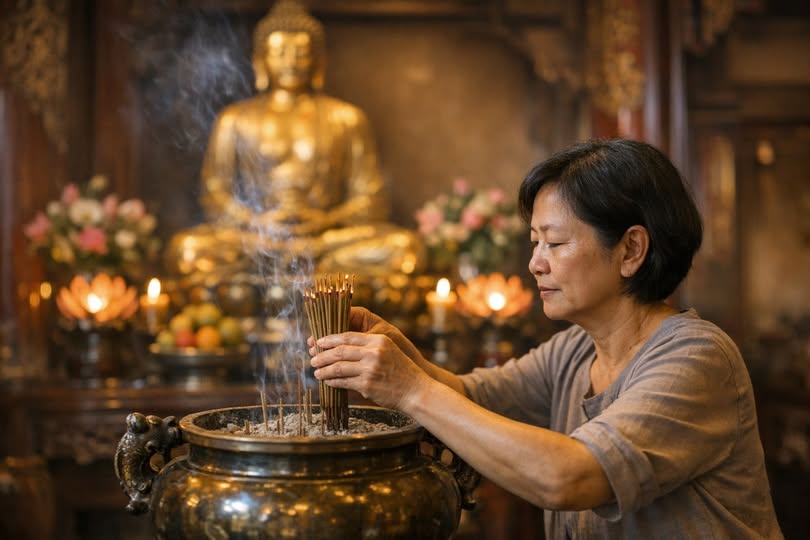
Ένα σημείο που τα διαδικτυακά κείμενα συχνά υποβαθμίζουν είναι η λατρευτική και τελετουργική διάσταση. Στο Χονγκ Κονγκ αυτό φαίνεται καθαρά σε χώρους όπως το Chi Lin Nunnery και το Nan Lian Garden, όπου πολλοί πιστοί ανάβουν θυμίαμα, κάνουν λατρευτικές υποκλίσεις και αφήνουν μικρές προσφορές ως πράξη τιμής και ευλάβειας. Αντίστοιχα, σε μεγάλα βουδδιστικά συγκροτήματα όπως το Po Lin Monastery στο Lantau (κοντά στο Tian Tan Buddha), βλέπει κανείς προσκυνητές να συμμετέχουν σε ψαλμωδίες και τελετές, αλλά και να εκφράζουν προσωπικά αιτήματα—για υγεία, ειρήνη στο σπίτι, επιτυχία στις εξετάσεις ή στην εργασία. Αυτές οι πρακτικές δεν είναι «ξένες» προς τον ιστορικό Βουδδισμό: οι προσφορές (λουλούδια, θυμίαμα, λυχνάρια, τρόφιμα) συνδέονται με την καλλιέργεια γενναιοδωρίας (dāna) και με την αφιέρωση των καρπών της καλής πράξης υπέρ άλλων (π.χ. ζώντων ή κεκοιμημένων). Δεν λειτουργούν υποχρεωτικά ως «ανταλλαγή» με μια θεότητα, αλλά ως άσκηση ευλάβειας, μνήμης του διδασκάλου και ηθικής καλλιέργειας.
Παράλληλα, ειδικά σε μορφές Mahāyāna που είναι διαδεδομένες στον κινεζικό χώρο, η αφοσίωση σε Μποντισάτβα (ον που οδεύει προς τη φώτιση) παίζει σημαντικό ρόλο. Στο Χονγκ Κονγκ πολλοί στρέφονται στον Avalokiteśvara/Guanyin (Μποντισάτβα της συμπόνιας) με προσευχές και τάματα, ελπίζοντας σε παρηγοριά και βοήθεια σε δύσκολες περιστάσεις. Αυτό, για τους πιστούς, δεν αναιρεί τον τελικό στόχο της απελευθέρωσης, αλλά λειτουργεί ως στήριγμα μέσα στην καθημερινότητα και ως τρόπος καλλιέργειας εμπιστοσύνης στη συμπόνια και στο ιδανικό του Μποντισάτβα.
Τέλος, υπάρχει και το θέμα των «μαγικών πρακτικών». Σε ορισμένα βουδδιστικά περιβάλλοντα—ιδίως όπου υπάρχει επιρροή Vajrayāna ή συνύπαρξη με κινεζικές λαϊκές θρησκευτικές συνήθειες—συναντώνται μάντρα, φυλαχτά, τελετές προστασίας, ευλογίες και αποτροπαϊκές πρακτικές, οι οποίες σε έναν εξωτερικό παρατηρητή μοιάζουν «μαγικές». Οι ίδιοι οι Βουδδιστές δεν τις ερμηνεύουν όλοι με τον ίδιο τρόπο: άλλοι τις βλέπουν ως «επιδέξια μέσα» (upāya) για να οδηγηθεί ο άνθρωπος σε βαθύτερη άσκηση, άλλοι τις θεωρούν λαϊκές προσμίξεις που μπορεί να απομακρύνουν από τον πυρήνα της διδασκαλίας. Το γεγονός, πάντως, παραμένει: ο Βουδδισμός δεν είναι μόνο φιλοσοφία· είναι και θρησκευτική ζωή με τελετουργία, κοινότητα, ηθική και ποικίλες μορφές ευσέβειας.
Γι’ αυτό, όταν ένα διαδικτυακό post παρουσιάζει τον Βουδδισμό αποκλειστικά ως μήνυμα «αυτοκυριαρχίας», μεταφέρει μια μισή αλήθεια ανακατεμένη με υπερβολή. Μια τίμια προσέγγιση είναι να βλέπουμε τι διδάσκουν οι πηγές, πώς λειτουργούν οι ναοί, τι σημαίνουν οι προσφορές, τα αιτήματα και οι τελετές, και πώς συνυπάρχουν ο στοχασμός με τη λαϊκή ευσέβεια. Μόνο έτσι αποφεύγεται και η επιθετική προπαγάνδα και η ρομαντική ωραιοποίηση, και ανοίγει δρόμος για σοβαρή κατανόηση και σεβασμό.
Μητροπολίτης Χονγκ Κονγκ και Νοτιανατολικής Ασίας Νεκτάριος
***
The Fake Buddhism of Meme-Like Online Posts
Lately, various “pseudo-didactic” posts about Eastern religions have been circulating online. They are often shared uncritically, or used by some as a tool of polemic against the Church. The issue is not that they refer (mostly) to Buddhism; it is that many of these texts present an idealized, one-dimensional picture. As a result, the reader is left with the impression that Buddhism is simply a self-improvement technique—without ritual, without faith, without religious practice, and without any “metaphysical” elements. Yet this does not reflect the breadth of Buddhist traditions as they are actually lived, especially in places such as Hong Kong, where I reside.
Indeed, Buddhism is not a monotheism: the Buddha is not presented as a Creator God who determines human destiny. The emphasis is placed on understanding suffering (dukkha), its causes, and liberation through ethical training, concentration, and wisdom, as expressed in the Noble Eightfold Path. Central as well is the principle of karma: actions have moral consequences, not as “punishment” from God, but as a form of moral causality. From these points, however, it does not follow that “you are the absolute master who creates everything” with your thoughts. In many schools the mind plays a decisive role, yet the mind is also seen as bound by ignorance and attachments; for this reason it requires practice, discipline, and guidance.
One point that online texts often downplay is the devotional and ritual dimension. In Hong Kong this is clearly visible in places such as Chi Lin Nunnery and the Nan Lian Garden, where many worshippers light incense, perform devotional bows, and leave small offerings as acts of honor and reverence. Similarly, in major Buddhist complexes such as Po Lin Monastery on Lantau (near the Tian Tan Buddha), one sees pilgrims taking part in chanting and ceremonies, while also expressing personal petitions—for health, peace at home, success in exams, or success at work. These practices are not “foreign” to historical Buddhism: offerings (flowers, incense, lamps, food) are connected with the cultivation of generosity (dāna) and with dedicating the fruits of a good deed for the benefit of others (e.g., the living or the deceased). They do not necessarily function as an “exchange” with a deity, but as an exercise of devotion, remembrance of the teacher, and moral cultivation.
At the same time, especially in Mahāyāna forms widespread in the Chinese cultural sphere, devotion to bodhisattvas (beings who are on the path to awakening) plays an important role. In Hong Kong many turn to Avalokiteśvara/Guanyin (the bodhisattva of compassion) with prayers and votive offerings, hoping for consolation and help in difficult circumstances. For believers, this does not cancel the final aim of liberation; rather, it functions as support within daily life and as a way of cultivating trust in compassion and in the bodhisattva ideal.
Finally, there is also the issue of “magical practices.” In certain Buddhist settings—especially where there is Vajrayāna influence or a coexistence with Chinese folk-religious customs—one encounters mantras, amulets, protective rites, blessings, and apotropaic practices, which to an outside observer may appear “magical.” Buddhists themselves do not all interpret these in the same way: some view them as “skillful means” (upāya) that can lead a person into deeper practice, while others consider them folk accretions that may draw attention away from the core of the teaching. In any case, the fact remains: Buddhism is not only philosophy; it is also a lived religious life, with ritual, community, ethics, and diverse forms of devotion.
For this reason, when an online post presents Buddhism exclusively as a message of “self-mastery,” it conveys a half-truth mixed with exaggeration. An honest approach is to look at what the sources teach, how temples actually function, what offerings, petitions, and ceremonies mean, and how contemplation coexists with popular piety. Only in this way can one avoid both aggressive propaganda and romantic idealization, and open a path toward serious understanding and respect.
Metropolitan of the Eastern Orthodox Metropolis of Hong Kong and Southeast Asia, Nektarios